



What Is an AI Sales Agent?
An AI sales agent is an autonomous software system that performs prospecting, enrichment, intent detection, and outreach, not as separate point tools, but as a unified, natural-language-driven worker. Unlike a copilot that merely assists, such as drafting emails or summarizing calls, an AI sales agent executes end-to-end workflows: it finds accounts, verifies contacts, prioritizes signals, personalizes messaging, and updates the CRM. It adapts based on outcomes and only escalates complex situations to humans.
In short: you tell it what to do; it figures out how.
You don't need another sales tool. You need a system that turns five tools into one AI agent.
In 2026, data is not the problem. Your ZoomInfo account is full of leads, your Clay workflows are running, your Apollo sequences are sending, and your 6sense dashboard is lighting up with intent scores. Yet your SDRs still are not booking meetings.
The issue is not data volume. It is tool stacking.
Overview
B2B sales teams use 8-14 tools on average, yet SDRs spend less than 30% of their time selling. Tool stacking creates millions in shelfware costs, degrades data quality (25% CRM error rate, 30% annual data decay), and leads to 15-25% revenue loss from bad data. More than 50% of GenAI projects fail at proof of concept due to poor data foundations.
The solution is not swapping one point solution for another. It is consolidating the five-tool stack (data, enrichment, intent, outreach, CRM) into a single AI-native platform. Lev8 delivers 85-92% data accuracy for APAC-focused and global teams expanding into Asia, powered by natural language and zero engineering overhead. This article breaks down why the old stack fails, how to migrate, and what results to expect.
The Real Cost of the 5-Tool Stack
Sales reps spend only 28-34% of their time actually selling. Salesforce's State of Sales report found that the remaining 66-72% goes to CRM data entry (17%), email and admin tasks (14%), prospecting research (14%), and internal meetings (15%), with manual research and administrative overhead eating the hours that should be spent on live conversations.
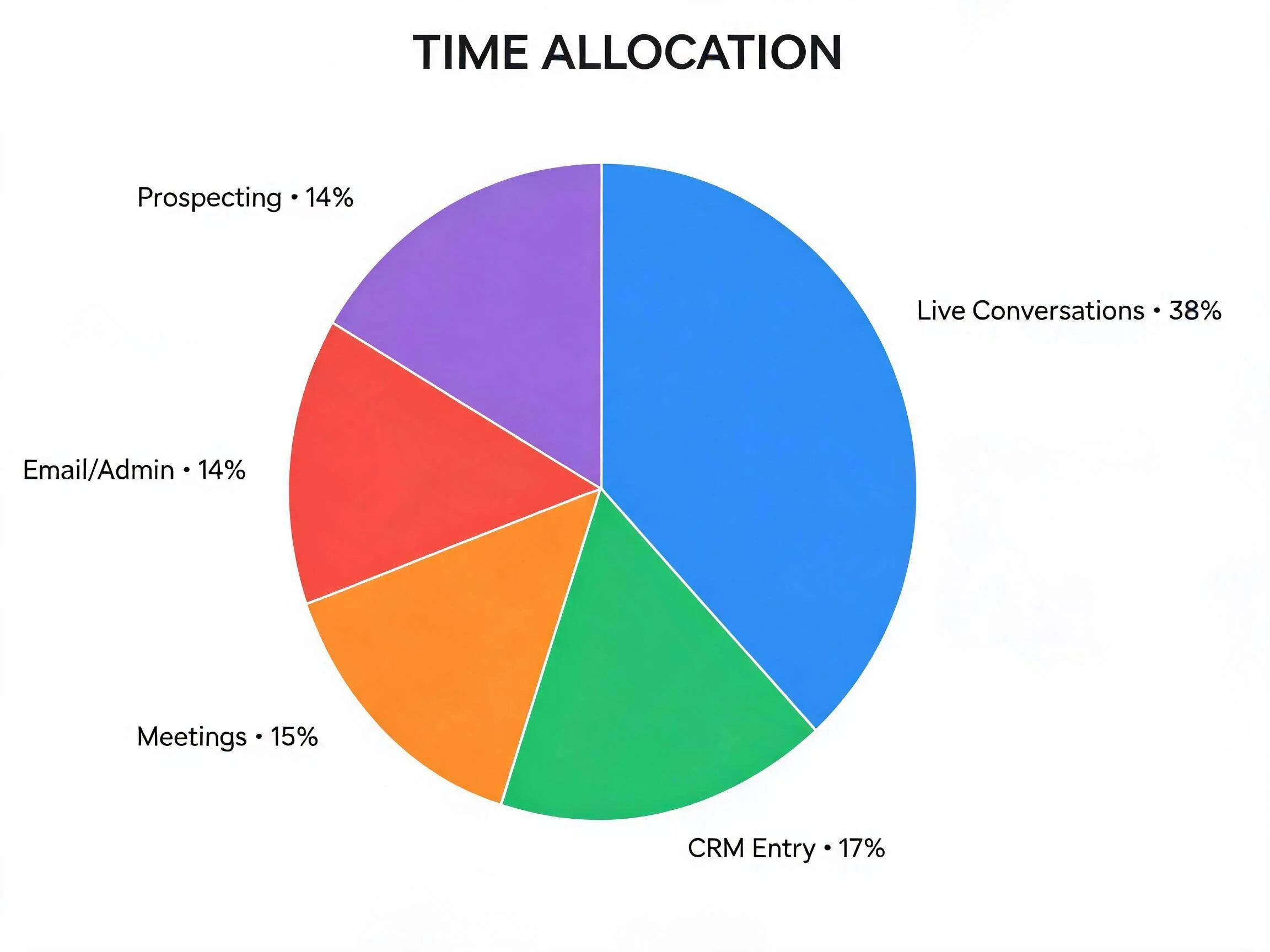
Source: Salesforce State of Sales Report, 2024
Tool switching breaks judgment. Every extra tab forces reps to re-evaluate context and priorities. Research suggests each switch carries a cognitive penalty of 15 to 25 minutes to fully refocus.
The average B2B sales rep now juggles between 8 and 14 tools daily. The average knowledge worker toggles across 11 apps per day, up from six in 2019. Yet despite more tools, sellers use only a fraction of them. The toll of "tool sprawl" is staggering: reps who feel overwhelmed by too many tools are 43-45% less likely to hit quota (Gartner).
The result? 83.4% of SDRs fail to consistently hit quota. That is a systems problem, not a talent shortage. It is what happens when SDRs spend less than two hours a day in live conversations and the rest disappears into tool juggling, manual research, and CRM data entry.
The Shelfware Trap
Across enterprises, the average company runs 312 SaaS applications, but actively uses only 47% of its licenses, creating a $21 million annual shelfware problem per organization. B2B teams pay for 8-14 sales tools, but reps actively use only a fraction. CFOs have had enough.
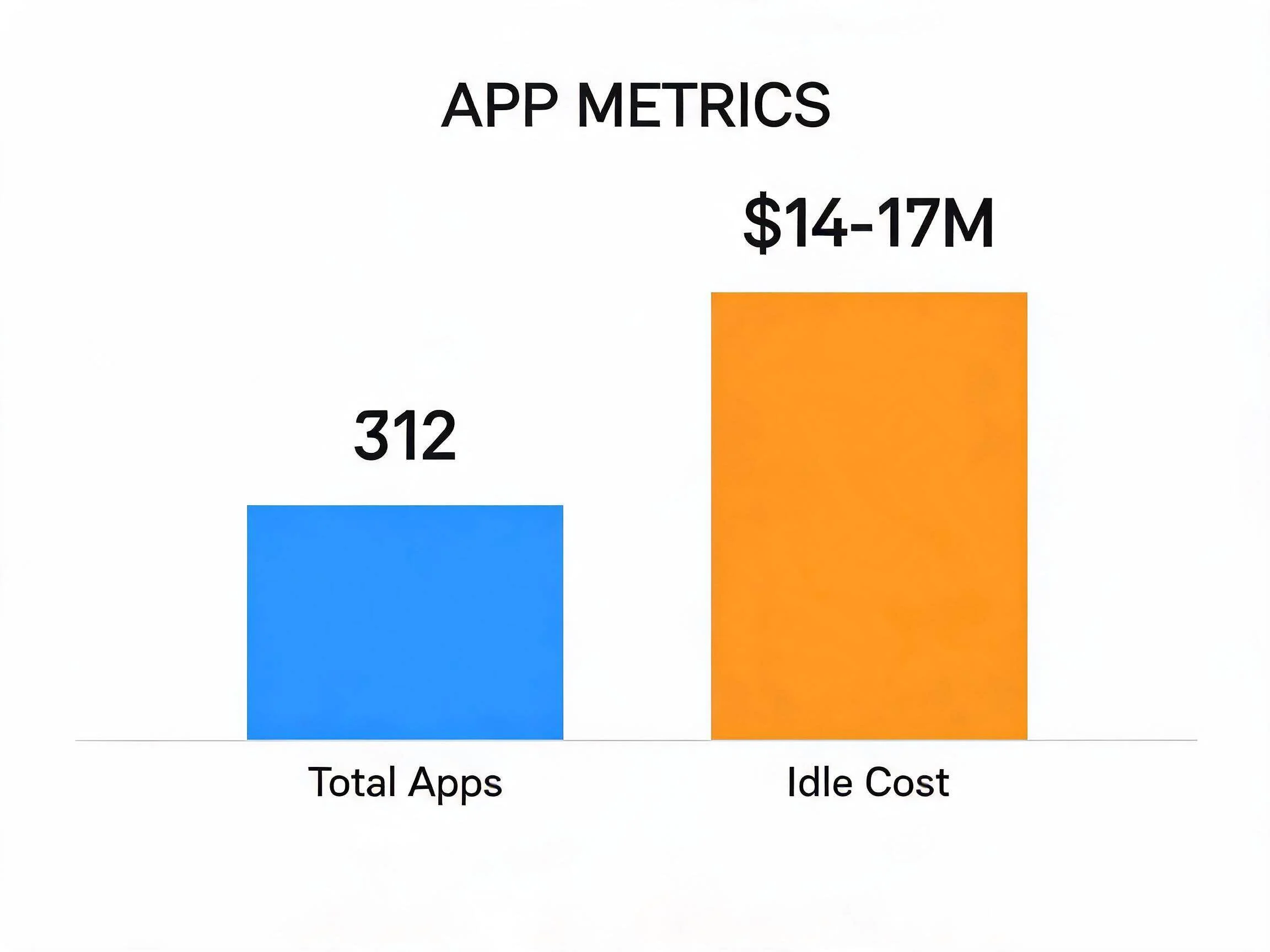
Source: Medha Cloud / SaaS Management Index 2026
54% of CIOs are now actively pursuing vendor consolidation. 45% of AI budgets are replacing existing software budgets. Only 3% expect AI to lead to more vendors. The message is clear: organizations are aggressively cutting their software portfolios.
McKinsey predicts a consolidation wave that will cut SaaS costs by 20-35% by 2027, with 70% of firms planning active consolidation in 2026. And for good reason: companies consolidating their tech stacks see 20-35% cost reductions and 3.2x ROI within 12 months. AI-native capabilities can now replace 25-35% of point solutions out of the box, making 2026 the tipping point for consolidation.
The Data Poison Beneath Your AI
Before any AI tool can work, it needs clean data. But the average B2B CRM carries a 25% error rate on contact records. B2B contact data decays roughly 30% per year. In just one year, 70% of contacts experience at least one job title change, email address change, or company move.
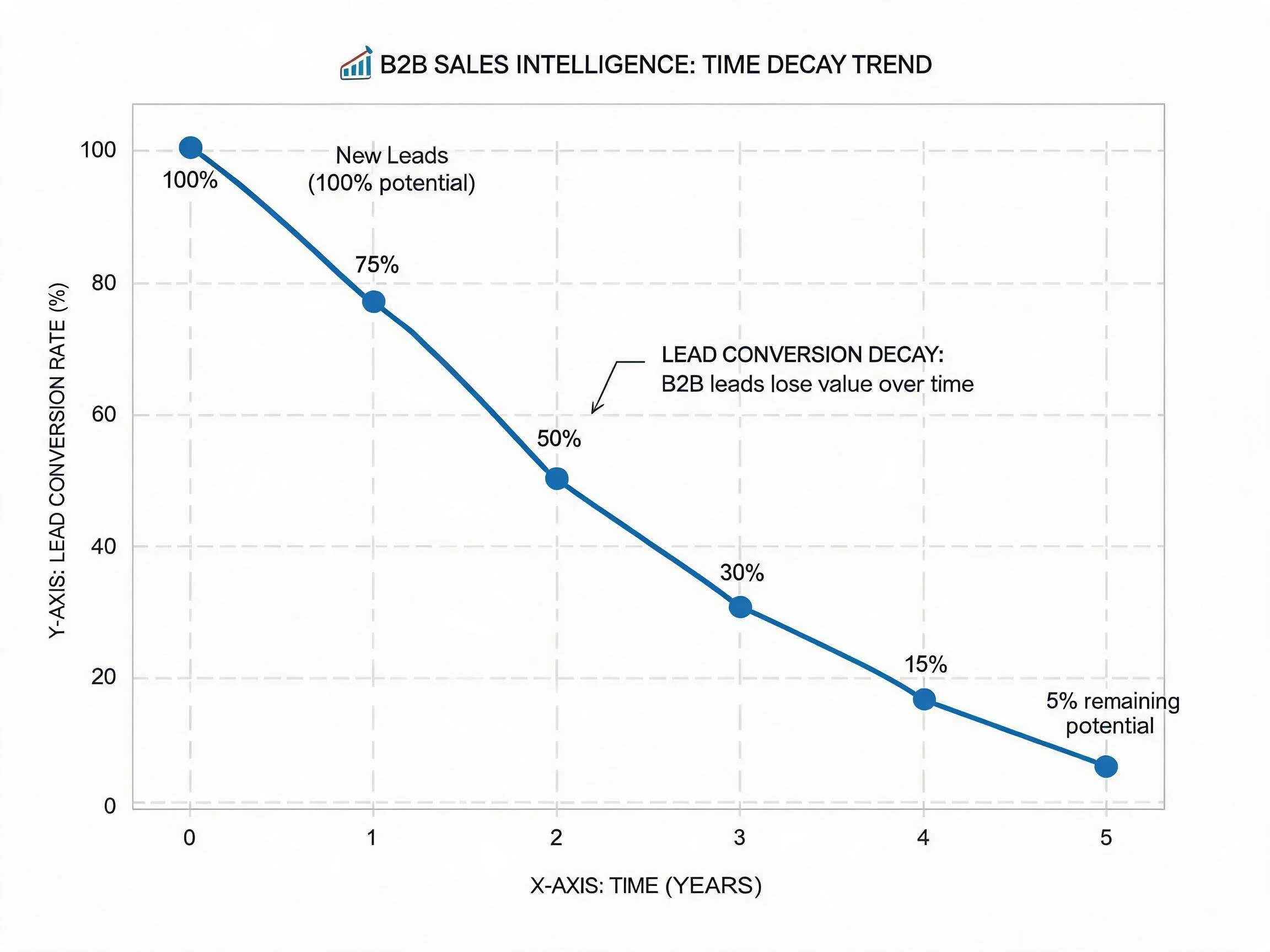
Source: Industry benchmark data (B2B contact data decay rate 30% annually)
84% of organizations believe their customer data is inaccurate. Bad data costs the average organization $12.9 million annually, per Gartner. MIT Sloan puts the revenue impact at 15-25%. That is why Gartner predicts that by the end of 2026, at least 50% of generative AI projects will be abandoned after proof of concept due to poor data quality.
Siloed, fragmented data leads directly to AI failure. Gartner finds that 85% of AI projects fail to deliver expected business value. The companies actually extracting value from AI spend 50-70% of their implementation budget on data preparation before a model ever runs. Most enterprise teams have this ratio inverted.
You cannot build an AI-powered GTM engine on a broken data foundation.
What Actually Works: One AI-Native Platform
The fix is not replacing ZoomInfo with another data provider, or swapping Clay for something similar. That only exchanges one set of problems for another: static data, API fragility, fragmented workflows, and a constant need for engineering support.
Top-performing teams are shifting from point solutions to unified platforms built for the entire revenue lifecycle, where AI handles prospecting, enrichment, personalization, and engagement, not as separate tools, but as one integrated agent.
- Natural language, not SQL. No complex filters or API workflows. The agent understands plain English.
- One platform, not five tabs. Prospecting, enrichment, intent, outreach, and CRM sync live in one place, not five disconnected tools.
- Signals in your workflow, not a dashboard. Actions and insights push directly into your CRM, Slack, and email. The agent keeps your team moving.
McKinsey research shows that companies using agentic AI see 3-15% revenue increases and up to 40% faster deal cycles. By 2026, over 65% of enterprise sales teams already deploy AI agents for prospecting and qualification.
When Gartner identifies sales manager effectiveness as one of the top trends for CSOs in 2026, they recommend a fundamental redesign of the sales manager role, from inspecting deals to amplifying seller effectiveness. That redesign starts with the tools managers use daily.
Lev8: The AI-Native GTM Platform Built for APAC
Lev8 is an AI-native GTM platform for B2B teams, whether based in APAC or headquartered in English-speaking countries (US, UK, Australia) looking to expand into APAC.
It combines an AI sales agent, prospecting tool, and personalized outreach engine with 85-92% data accuracy and natural language workflow, with no engineering team required.
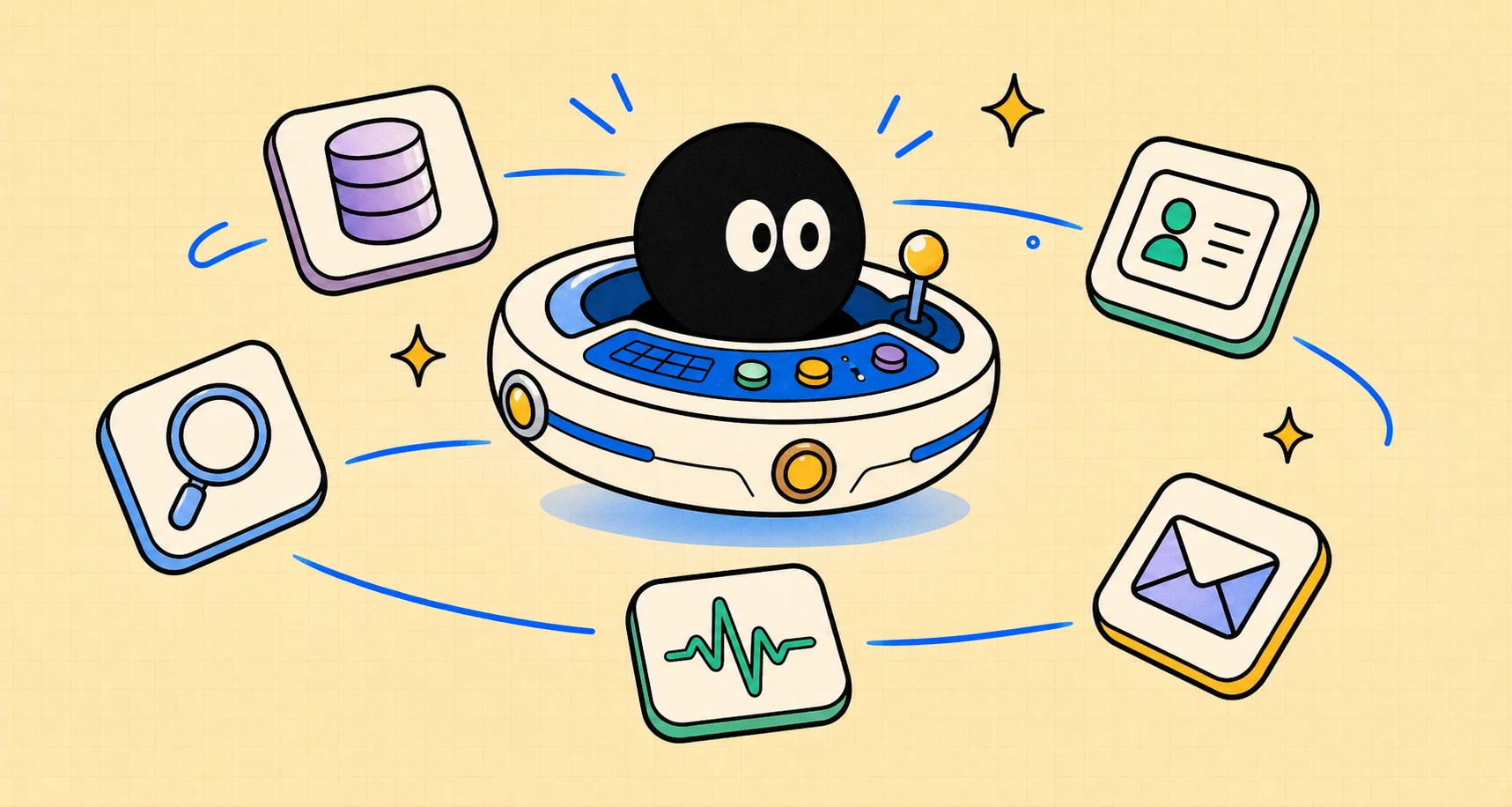
A visual comparison of the fragmented five-tool stack versus a unified AI-native platform.
What Lev8 does:
- Find the right accounts. Describe your ideal customer in plain English. The agent finds and verifies them.
- Decode intent. Know why an account is in-market, not just a score.
- Personalize at scale. Generate outreach based on real-time signals: funding events, hiring, job changes, and website engagement.
- Close the loop. Sync everything to your CRM automatically. No manual entry. No broken workflows.
Stop stacking. Start unifying.
Ready to see your data's true signal-to-noise ratio? Take 1 minute to download the Signal Strength Scorecard, or request a product experience to map your path from tool sprawl to a single AI agent.
Data sources: Salesforce, Gartner, McKinsey, MIT Sloan Management Review, G2, Reddit. See inline links for specific reports.