




AI and agents have made exposure easier to create. Teams can produce content in batches, test creative faster, and create touchpoints across more channels.
But more exposure does not automatically create better acquisition. For growth hackers, the harder question is how to identify qualified traffic: people who match the target customer profile, show signs of need, and deserve priority outreach.
Quick Answer
Growth hackers can use marketing tools to improve user acquisition by making three decisions before scaling a campaign:
- Who is the right person? Move beyond company and title filters by checking role relevance, company context, and current growth signals.
- Who belongs in the email segment? Verify the contact, assess list quality, and enrich the context before tuning subject lines or templates.
- Which creators can influence likely users? Evaluate topic fit, audience fit, product context, and contactability instead of ranking creators by follower count alone.
The shared principle is simple: use tools to qualify and prioritize opportunities, not just to create larger lists or more touchpoints.
B2B Lead Generation: Find the Right People, Not Just Companies
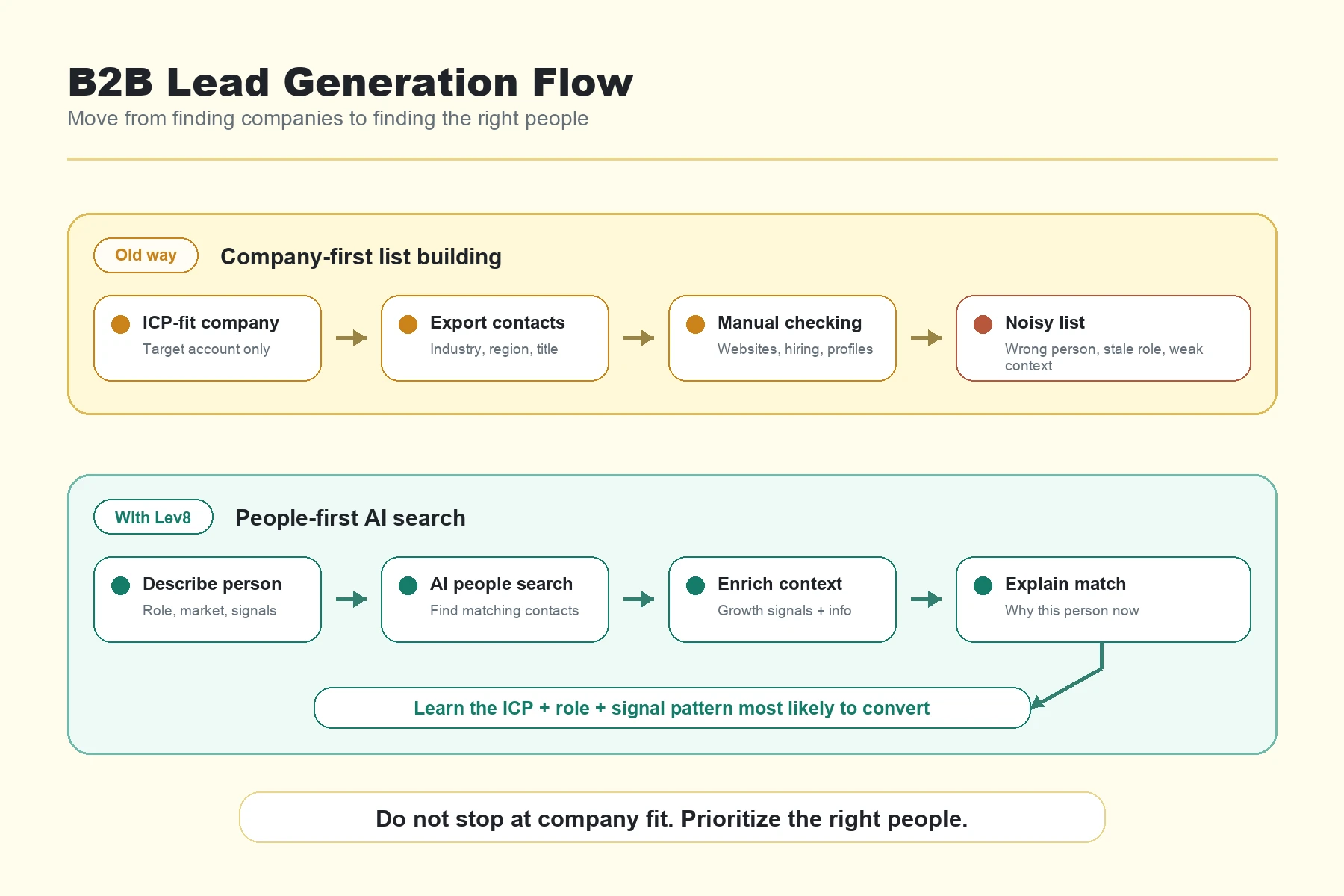
The common mistake in B2B lead generation is treating an ICP-fit company as a contact worth reaching.
A target account may have many employees, but only a few influence buying, trials, partnerships, or internal adoption. Growth teams need more than company names. They need the people inside those companies who match the current go-to-market context.
Consider a B2B SaaS growth team testing a new outbound market. The team wants to find revenue operations, sales operations, or outbound growth leaders at US SaaS companies. It wants to prioritize companies expanding sales teams, discussing pipeline quality, or showing signs of new growth pressure.
The old workflow is usually heavy. A team exports companies and contacts by industry, region, and job title, then asks SDRs to manually check websites, hiring pages, social profiles, and recent company updates. The list may look large, but it often contains three low-quality groups:
- The company matches the ICP, but the contact does not influence the relevant decision. A Reddit sales discussion makes a similar point: the source of a list is not the same as a list of potentially qualified buyers.
- The title matches a keyword, but the person has changed roles or no longer works at the company. G2's lead intelligence category lists incomplete records, slow prospecting, and low-quality leads among common buyer problems.
- The email may be usable, but the team lacks enough background to judge outreach priority. Buyers need both reliable data and a faster way to decide which contacts deserve attention.
With Lev8, the process can start with a plain-language description of the target person and move into real-time AI people search. A growth team might enter this prompt:
Find outbound growth, sales operations, or revenue operations leaders at US B2B SaaS companies that are expanding sales teams or publicly discussing pipeline, prospecting, or lead quality.
Lev8 searches for matching contacts, enriches company context, adds public signals, finds contact information, and explains why each person matched. The team can review whether the account is in a growth window, whether the person is tied to the current pain point, and whether the contact deserves priority.
The goal of a growth experiment is not to contact everyone. It is to learn which ICP, role, and signal pattern is most likely to convert. A B2B Lead Generator can create the starting set, while the qualification logic determines who enters the test.
Email Marketing: Clean the List Before Tuning the Message
Email remains a common acquisition channel for growth teams, but results depend heavily on list quality and message relevance.
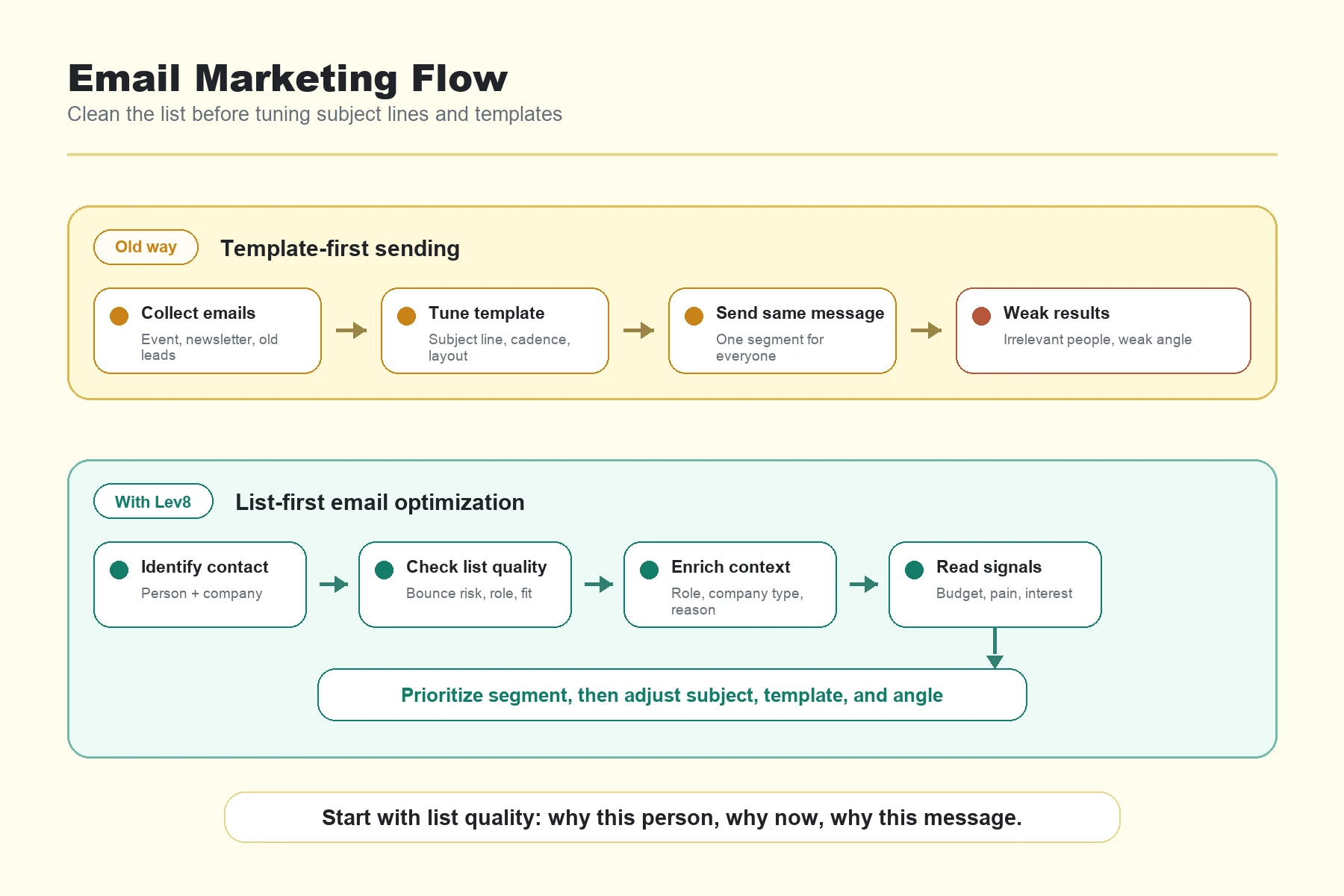
Many teams spend most of their time on subject lines, templates, and sending cadence. They often skip the earlier questions: Who is this email going to? Is this person relevant? Do we know the right angle for the first message?
McKinsey's analysis of AI in marketing and sales identifies lead discovery, marketing optimization, and personalized outreach as promising generative AI use cases for commercial teams. The practical reason is that personalization only works when the contact is accurate and the background is clear.
Imagine an export-focused software team collecting several hundred registration emails from an online event. In the old workflow, the team might put those emails into one EDM segment and send the same template to everyone.
Two problems appear quickly. Some emails do not belong to the target audience. Others may belong to target accounts, but the team still does not know who the person is, what they own, or why the message is relevant.
In seven years of growth work, weak email performance has often started with the list rather than the subject line. Before optimizing copy, check whether the address may bounce, whether the contact still works at the company, whether the list fits the target audience, and whether the data cost produced contacts worth using.
Independent testing supports the need for this check. BounceGuard's 2026 comparison of Apollo, Hunter, and Snov used a 5,000-contact B2B sample and found differences in deliverable email rates across tools. It also notes that B2B contact data decays as people change jobs and companies.
That means email optimization should start with the list. Use an Email Verifier to check addresses before sending, and use Reverse Email Lookup when an email is the starting point for identifying the person and company behind it.
Lev8 can enrich role, company type, public background, and match reason, then help a team decide who belongs in the priority segment. For event registrations, newsletter subscribers, trial signups, or old lead lists, this turns volume into a list the team can segment and act on.
Lev8 can also monitor public signals from leads and spot signs of new budget, new pain, or interest in changing the current setup. A team can then adjust the subject line, template, and angle, or generate an opening line based on the contact's background.
A good email should not simply introduce the product. It should make clear why this person, why now, and why the topic matters to their role.
KOL Finder: Strong Exposure Does Not Always Convert
AI makes it easier for brands to produce content, but buyers still trust recommendations from real creators, experts, and community voices. For SaaS, AI tools, B2B services, and global products, KOL partnerships can support early user acquisition, market education, and trust building.
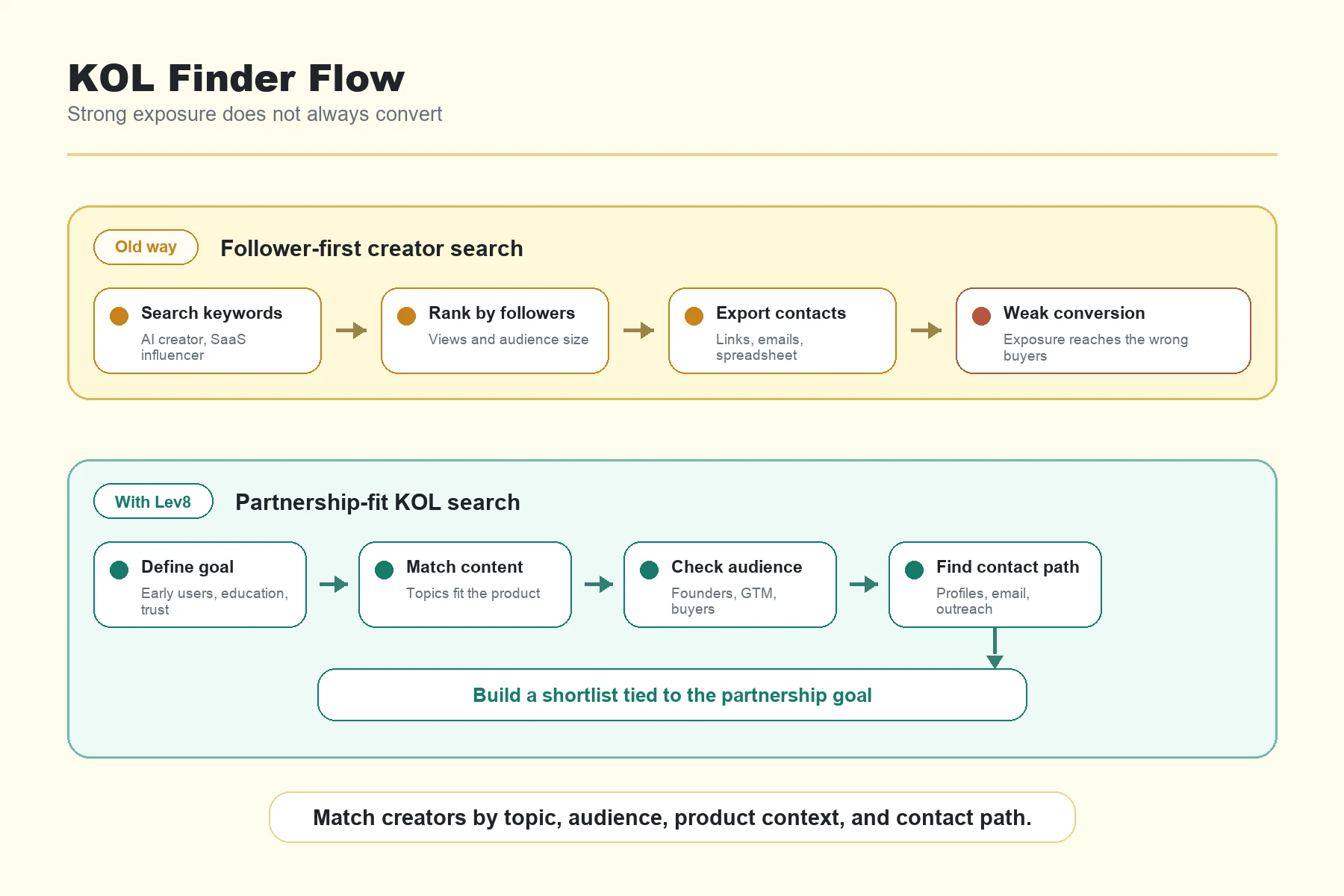
But a KOL finder should not rank creators by follower count alone. A creator is worth considering only when the content topic, audience, product context, decision influence, and contact path all make sense.
Content Marketing Institute's B2B research emphasizes that B2B content marketing is about building credibility, educating the market, and reaching the right audience. The same logic applies to creator partnerships. The goal is not to find the biggest account; it is to find creators who can influence the right buyers.
An AI SaaS team may want to use creator partnerships to acquire early users. If it filters only by follower count, it may get a large list of creators, but that does not mean those creators can drive signups.
The old workflow may start with searches such as “AI YouTuber,” “SaaS influencer,” or “productivity creator,” then move follower counts, channel links, and emails into a spreadsheet. This feels fast, but exposure can still reach the wrong audience. A creator may review AI tools successfully while attracting students or general AI enthusiasts, even though the product is built for founders, sales teams, growth teams, or GTM operators.
Reddit's B2B lead generation guide makes the broader point: lead generation is not about putting random names into a funnel. It is about finding people who may become customers, partners, or decision influencers.
In Lev8, the team can make the search criteria specific to the partnership goal:
Find YouTube creators who regularly review AI productivity tools and have an audience that includes startup founders and GTM teams.
Or:
Find LinkedIn creators who consistently talk about B2B sales, prospecting, and outbound growth.
Lev8 searches for matched creators and enriches their background, content focus, social profiles, and contact details. The team can then use an Email Finder to locate an appropriate outreach address and draft a message based on the creator's content.
This changes KOL discovery from collecting a large creator list to building a shortlist tied to a clear acquisition goal.
Build the Shortlist Before Scaling the Channel
In the AI era, growth competition will shift from who can produce more content to who can identify qualified opportunities faster.
Growth hackers do not need marketing tools that only help teams do more work or create more touchpoints. They need tools that help decide who belongs on the list, who deserves priority, and who is most likely to become the next user.
This is where Lev8 fits. It helps growth teams build acquisition workflows around real people, current context, and public intent signals, so each outreach effort begins closer to qualified growth.