




Claude Fable 5 is back in the spotlight. On June 30, export controls on Fable 5 and Mythos 5 were lifted, with access to Fable 5 beginning to return globally on July 1. Earlier, on June 12, Anthropic had suspended access after a U.S. government directive affected foreign national access to both models, according to Anthropic's statement on Fable 5 / Mythos 5 access.
For Lev8 users, the question is practical: when an advanced AI model faces regulatory, safety, or access changes, can a people-search workflow still run smoothly? Fable 5 shows why model capability matters, but it also shows why product stability, data quality, and fallback design matter just as much.
What Is Claude Fable 5?
Claude Fable 5 is Anthropic's advanced model for complex knowledge work, coding, enterprise workflows, visual understanding, and long-running tasks. Anthropic describes Fable 5 as a Mythos-level model for ambitious projects that require sustained reasoning and multi-step execution on the Claude Fable 5 page.
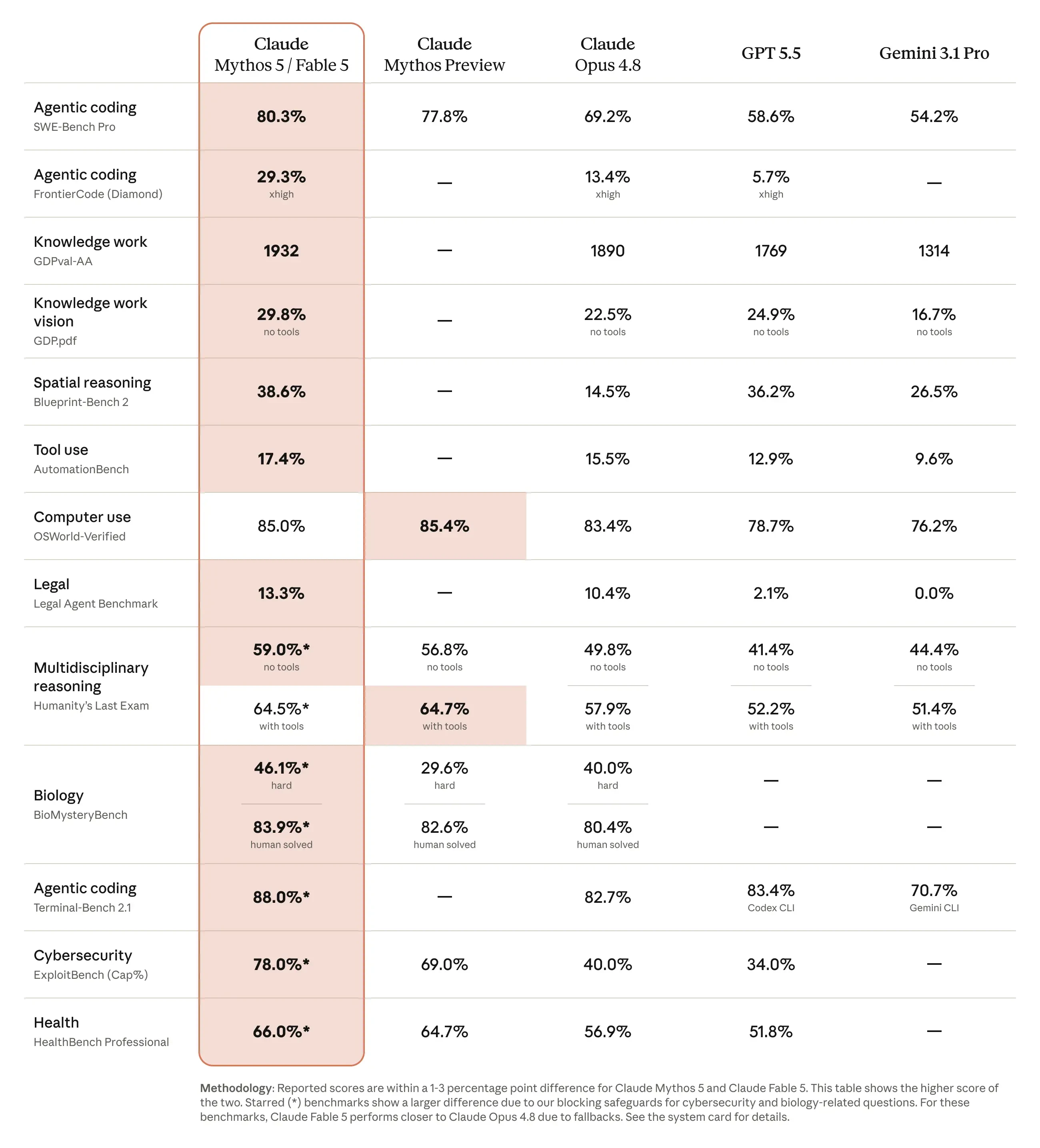
In Anthropic's launch announcement for Claude Fable 5 / Mythos 5, the company says Fable 5 performs strongly across software engineering, knowledge work, vision, scientific research, and other benchmarks. For Lev8, this kind of model capability can be useful: it can help interpret job requirements, identify relevant signals in a person's background, expand search logic, and generate richer candidate or lead summaries.
Strong models can turn vague search intent into clearer workflows. They can also make scattered information easier to evaluate. At the same time, more capable models often come with stricter safety boundaries and more sensitive access rules.
Why Was Fable 5 Restricted?
Fable 5 was restricted because of export-control and safety concerns. Anthropic said the U.S. government directive required it to suspend foreign national access to Fable 5 and Mythos 5, which led the company to disable both models for all customers to ensure compliance.
Safety was also part of the issue. Anthropic said the government had become aware of a possible jailbreak method involving Fable 5. The company also stated that it had already used a defense-in-depth approach, including safeguards, red teaming, monitoring, and data retention for safety review.
What Claude Fable 5 Means for Lev8
Lev8 is an AI-powered people and company search platform for teams that need to find, evaluate, and reach the right people faster. Its workflow includes qualified people search, company search, waterfall data enrichment, intent signals, and multi-channel outbound, as described on the Lev8 website.
That context matters when looking at the Fable 5 incident. If a people-search product depends too heavily on one external model, model access changes can create real friction. A model might become temporarily unavailable, API permissions might change, responses might slow down, or safety classifiers might block requests that were previously allowed.
For Lev8, the key issue is the full workflow: turning a role, target account, or buyer persona into useful people results. The product experience depends on whether the search path is smooth, whether the data is fresh and usable, and whether the returned profiles help the user decide what to do next.
Fable 5's temporary restriction is a reminder that model volatility should be handled inside the product architecture. Users should not have to feel every model-side change as a disruption in their daily sourcing or recruiting workflow.
How Lev8 Supports a Stable People-Search Experience
Lev8 Is Built On Algorithm Quality And Data Workflows
Lev8's value comes from its own algorithm quality, data workflow, and understanding of GTM and hiring-adjacent search use cases. Lev8 is not handling a single prompt-and-answer task. It supports a broader workflow: discovery, filtering, validation, enrichment, scoring, and outreach.
Large language models can improve semantic understanding and content generation. Lev8's own search, matching, signal, and data-enrichment layers support the core workflow. This structure lets Lev8 benefit from stronger models like Fable 5 without making the user experience depend entirely on one model's availability.
Lev8 Does Not Rely On A Single Model
Fable 5's access changes show that any external model can be affected by policy, safety rules, pricing, latency, or regional availability. A stable product needs room to adapt.
Lev8 can reduce that risk through multi-model fallback, task routing, caching, and rule-based workflow layers. More complex reasoning tasks can use stronger models, while standard search, structured data handling, and baseline matching can rely on more stable systems. If one model becomes slower or less available, the workflow can continue through another path.
Lev8 Prioritizes The Experience Users Actually Feel
Most users do not want to track model versions or safety-classifier updates. They want the product to return useful people, enrich the right data, and help them move faster from search to evaluation to outreach.
That is why Lev8 should be evaluated on practical reliability signals: search completion, data freshness, response speed, match quality, credit usage, and whether the output helps a team take action. If a model starts behaving differently, the product should be able to retry, reroute, or calibrate results before the issue reaches the user.
What Users Should Focus On
For users, "which model does this product use?" is a fair question. It can affect accuracy, generation quality, and speed. Still, the model is only one part of the experience. The product's search logic, data sources, enrichment quality, result clarity, and uptime are just as important.
Lev8 also gives users a low-risk way to evaluate the product before paying. According to Lev8's pricing page, the free plan includes 300 credits per monthly cycle, so users can test real searches, real roles, and real outreach workflows before upgrading.
That is the most useful test. Instead of judging the product only by the model name behind it, users can look at how Lev8 performs in their actual workflow: whether it finds relevant people, saves research time, returns usable data, and makes the next action clear.