



Sales intelligence is no longer another name for a large contact database. In 2026, the category spans company and contact data, intent and behavioral signals, relationship intelligence, AI research, and the context sellers need before they act.
That breadth creates a buying problem: two products may both call themselves sales intelligence while improving completely different decisions.
This article compares 10 tools by primary strength, operational fit, pricing, and real-world limitations. Rather than ranking them globally, it helps you identify what your current system cannot do - and choose the right tool to fill that gap.
Quick Answer: The Best Sales Intelligence Tools by Use Case
| Tool | Best fit | Starting price / model |
|---|---|---|
| ZoomInfo | Enterprise data coverage | ZoomInfo Lite is free; paid configurations are custom. |
| Apollo | SMB data plus engagement | Free plan; public paid configurations currently start at $79 per seat per month billed annually. |
| Cognism | EMEA and phone-first intelligence | Custom pricing. |
| LinkedIn Sales Navigator | Relationship intelligence | Core starts at $119.99 per license per month; Advanced starts at $159.99; Advanced Plus is custom. |
| Clay | Configurable enrichment and research | Free; Launch starts at $185 per month and Growth at $495. |
| 6sense | Predictive account intelligence | Free entry experience; paid packages are custom. |
| Demandbase | Enterprise buying-group intelligence | Custom pricing. |
| Bombora | Third-party topic intent | Custom pricing. |
| Common Room | Product, community, and digital signals | Essential starts at $2,500 per month billed annually; higher plans are custom. |
| Lev8 | Context-First Prospecting | Free with 300 monthly credits; Starter is $49 per month. |
Pricing and packaging checked against official vendor pages on August 13, 2026. Reconfirm current terms before purchasing.
There is no universal winner. ZoomInfo and Cognism become relevant when coverage and contact confidence are the problem. Bombora, 6sense, and Common Room address different signal environments. Clay helps technical teams assemble their own intelligence workflow. Lev8 fits teams that still need to interpret current public evidence before deciding whom to contact and why.
What Counts as Sales Intelligence in 2026?
Sales intelligence is the data and interpretation used to identify, understand, and prioritize potential buyers. Modern platforms may combine contact records, firmographics, technographics, relationship data, website activity, third-party intent, job changes, product signals, research, and CRM enrichment.
The category overlaps with adjacent software, but the jobs are not identical. A CRM stores relationships and pipeline. A sales-engagement platform executes sequences and calls. Revenue intelligence usually analyzes conversations, deals, and forecasts. Intent data is one signal source inside a broader intelligence decision.
The practical question is earlier in the motion:
Who should the team approach, what changed, and what context should shape the next move?
Data, Signals, and Context: Three Different Buying Problems
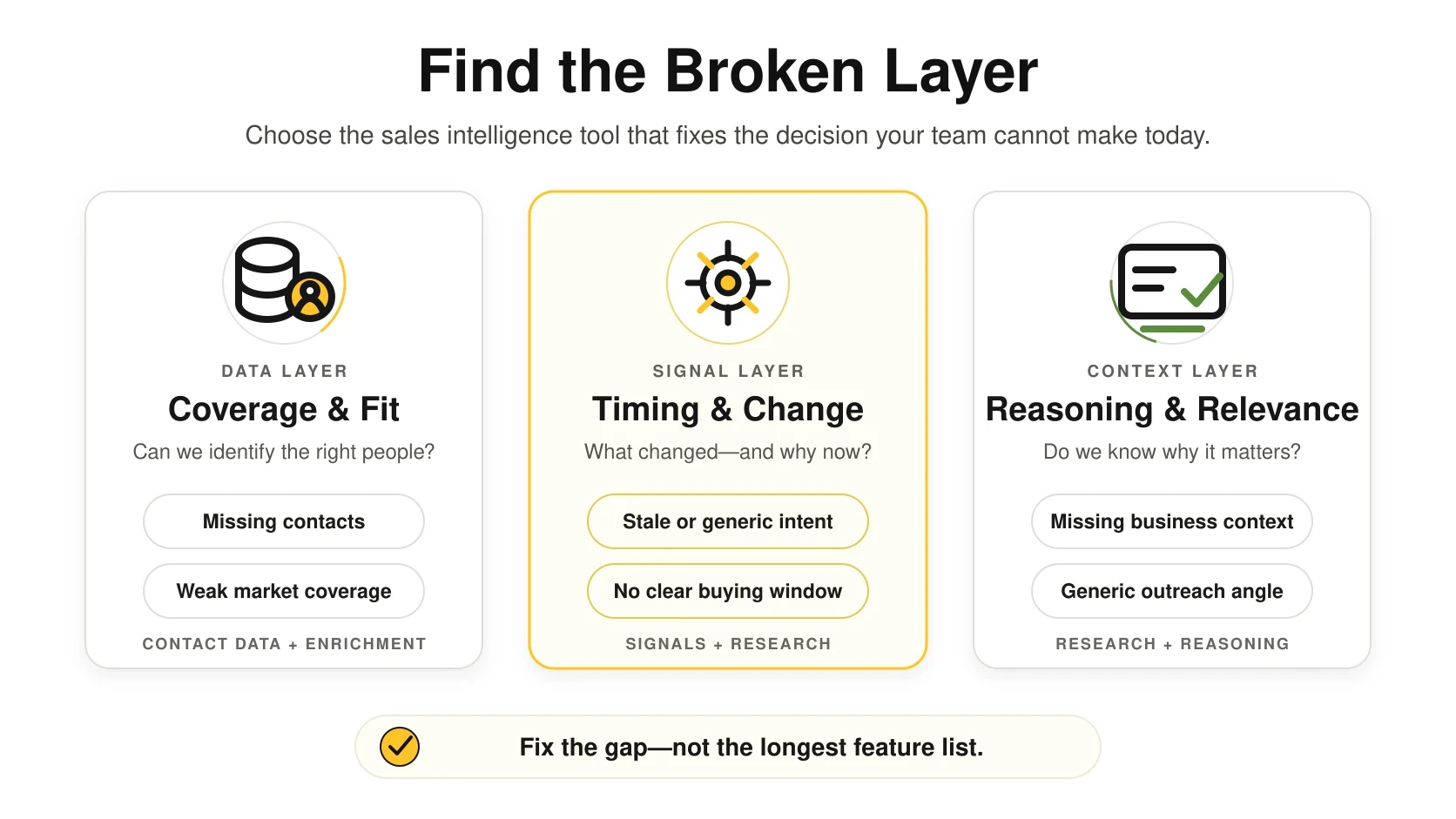
Figure 1. Diagnose whether the missing layer is data, signals, or context.
Data - Who fits?
Choose data-first when the ICP is clear but the team cannot reliably identify companies, people, or contact paths. The failure is usually weak market coverage, stale records, or contacts that cannot be reached.
Signals - What changed, and why now?
Choose signal-first when enough accounts exist but every account appears equally urgent. Useful signals may include intent, website activity, hiring, funding, job changes, product usage, or community engagement. A signal is useful only when it changes prioritization.
Context - Why does it matter?
Choose context-first when reps receive names and alerts but still reconstruct the business situation manually. Context connects evidence to relevance: why the event matters, which person is connected, and what should shape the first conversation.
The layers overlap. The goal is not to buy one tool for each box; it is to identify the decision your current system cannot make.
Comparison Table: 10 Sales Intelligence Tools at a Glance
ZoomInfo
Contact, company, intent, and GTM data
Enterprise data coverage
ZoomInfo Lite is free; paid configurations are custom.
Apollo
Database-led intelligence and engagement
SMB data plus engagement
Free plan; public paid configurations currently start at $79 per seat per month billed annually.
Cognism
Compliant contact and verified mobile data
EMEA and phone-first intelligence
Custom pricing.
LinkedIn Sales Navigator
Professional graph, job changes, and warm paths
Relationship intelligence
Core starts at $119.99 per license per month; Advanced starts at $159.99; Advanced Plus is custom.
Clay
Multi-provider enrichment and orchestration
Configurable enrichment and research
Free; Launch starts at $185 per month and Growth at $495.
6sense
Intent and buying-stage prediction
Predictive account intelligence
Free entry experience; paid packages are custom.
Demandbase
Account, buying-group, and engagement intelligence
Enterprise buying-group intelligence
Custom pricing.
Bombora
Company-level research signals
Third-party topic intent
Custom pricing.
Common Room
First-party, community, and external signals
Product, community, and digital signals
Essential starts at $2,500 per month billed annually; higher plans are custom.
Lev8
Public evidence, research context, and prospecting motion
Context-First Prospecting
Free with 300 monthly credits; Starter is $49 per month.
The table is a shortlist, not a scorecard. Test the leading candidates against a representative sample from your real market.
The 10 Best Sales Intelligence Tools in 2026
The tools below are ordered for editorial flow - not ranked from best to worst.
ZoomInfo - Enterprise data coverage
ZoomInfo is the broadest data-platform option in this comparison. It combines company and contact records with firmographics, technographics, intent, visitor identification, enrichment, and workflows. That breadth suits established teams that want a shared GTM data foundation rather than a lightweight lookup tool.
Pricing: ZoomInfo Lite is free; paid configurations are custom.
Watch for: Validate coverage in your exact market and model the full annual configuration - seats, credits, intent, integrations, and add-ons - not just access to the database.
Apollo - SMB data plus engagement
Apollo gives small and midsize teams an accessible starting point: search the database, reveal contact data, enrich records, and move prospects into sequences without assembling several products. It also offers signals, AI research, and workflow automation, so it should not be dismissed as a static database.
Pricing: Free plan; public paid configurations currently start at $79 per seat per month billed annually.
Watch for: Test data quality in your niche and include phone, export, and credit rules in the real cost. The all-in-one workflow is valuable only if both the data and engagement layer meet your standards.
Cognism - EMEA and phone-first intelligence
Cognism is most relevant when European coverage, privacy requirements, and phone accuracy materially affect pipeline. Its sales-intelligence environment combines company and contact data with phone-verified mobile numbers, enrichment, and intent capabilities.
Pricing: Custom pricing.
Watch for: The commercial case is strongest for established, phone-led teams. Email-only or low-volume buyers should test whether regional coverage and verified mobiles justify the package.
LinkedIn Sales Navigator - Relationship intelligence
Sales Navigator supplies a different type of intelligence: professional identity, career movement, organizational relationships, and shared connections. It is valuable when social selling, warm paths, or job changes influence whom the seller approaches and how.
Pricing: Core starts at $119.99 per license per month; Advanced starts at $159.99; Advanced Plus is custom.
Watch for: It does not replace a complete email and phone database. Plan for a separate enrichment or verification layer when off-platform contactability matters.
Clay - Configurable enrichment and research
Clay is an orchestration environment rather than one proprietary intelligence source. RevOps and GTM engineering teams can combine providers, waterfall enrichment, signals, AI research, qualification logic, and downstream routing.
Pricing: Free; Launch starts at $185 per month and Growth at $495.
Watch for: Flexibility creates operating responsibility. Someone must design, test, and maintain the workflow while monitoring both Data Credits and Actions.
6sense - Predictive account intelligence
6sense is designed for mature account-based teams. It combines account identification, intent, predictive buying stages, and seller prioritization to show which accounts may be in market and where they sit in the journey.
Pricing: Free entry experience; paid packages are custom.
Watch for: The output becomes useful only with a clear ICP, reliable CRM data, sufficient volume, and teams capable of acting on the prioritization.
Demandbase - Enterprise buying-group intelligence
Demandbase helps enterprise sales and marketing teams operate around a shared account view. Its platform connects account data, intent, engagement, buying groups, advertising, and orchestration.
Pricing: Custom pricing.
Watch for: It is an ABM operating platform, not a simple contact lookup. Validate implementation scope, data dependencies, and whether the organization can coordinate around the output.
Bombora - Third-party topic intent
Bombora's Company Surge identifies companies showing increased research activity around selected B2B topics. It is a specialist signal source for teams that already know which accounts and topics they want to monitor.
Pricing: Custom pricing.
Watch for: A topic surge does not identify every buyer or prove purchase readiness. Teams still need contact data, fit validation, interpretation, and a downstream activation system.
Common Room - Product, community, and digital signals
Common Room aggregates product usage, website, community, social, open-source, CRM, and external signals, then resolves activity to people and companies. It is particularly relevant to PLG, developer-tool, and community-led motions.
Pricing: Essential starts at $2,500 per month billed annually; higher plans are custom.
Watch for: Its value depends on having meaningful owned activity to unify. Low-signal teams may struggle to justify the platform and implementation cost.
Lev8 - Context-First Prospecting
Lev8 is built around Context-First Prospecting: research the situation before deciding whom to contact, why now, and what to say. It connects current public evidence, relevant people, contact paths, and a usable reason to act.
Pricing: Free with 300 monthly credits; Starter is $49 per month.
Watch for: It is not the largest prebuilt database or an enterprise ABM platform. Its advantage appears when research quality and current context matter more than raw list volume.
Sales Intelligence Pricing: What Are You Paying For?
The advertised monthly price rarely represents the complete operating cost. Vendors may meter seats, contact reveals, phone numbers, exports, data credits, workflow actions, intent topics, accounts monitored, or annual platform access.
Cost per usable prospect = (subscription + usage + add-ons + operating time) / relevant, reachable prospects with a usable next action
This metric exposes both cheap and expensive mistakes. A low-cost database becomes costly when sellers verify and research every record manually. A sophisticated signal platform wastes budget when alerts never change prioritization or messaging.
Before buying, run the same set of target companies through each shortlist candidate. Measure match rate, contact validity, signal relevance, research time, credit consumption, and successful handoff into the next sales action.
Final Recommendation: Start With the Missing Intelligence Layer
| Team situation | First shortlist |
|---|---|
| Broad enterprise data foundation | ZoomInfo |
| SMB data plus engagement | Apollo |
| EMEA and verified mobile data | Cognism |
| Relationship and career context | LinkedIn Sales Navigator |
| Configurable enrichment and research | Clay |
| Predictive enterprise ABM | 6sense or Demandbase |
| Specialist third-party topic intent | Bombora |
| Product, community, and digital signals | Common Room |
| Current public evidence and prospecting context | Lev8 |
Better data solves coverage. Better signals improve timing. Better context explains why the evidence matters.
When Context Is the Missing Layer
Lev8 becomes relevant when the team already has access to names or alerts but still spends too much time understanding the situation. Its Context-First Prospecting approach begins with current evidence, then connects that evidence to relevant people and a reason to act.
It is not a replacement for every database, intent source, or enterprise ABM system. It is the stronger fit when manual research and generic outreach remain the bottleneck.
Start with context, not another contact list. Turn current public evidence into a reason to act.
Start Free - 300 free credits, no credit card required.